What Is a Volatility Surface in Options Pricing?
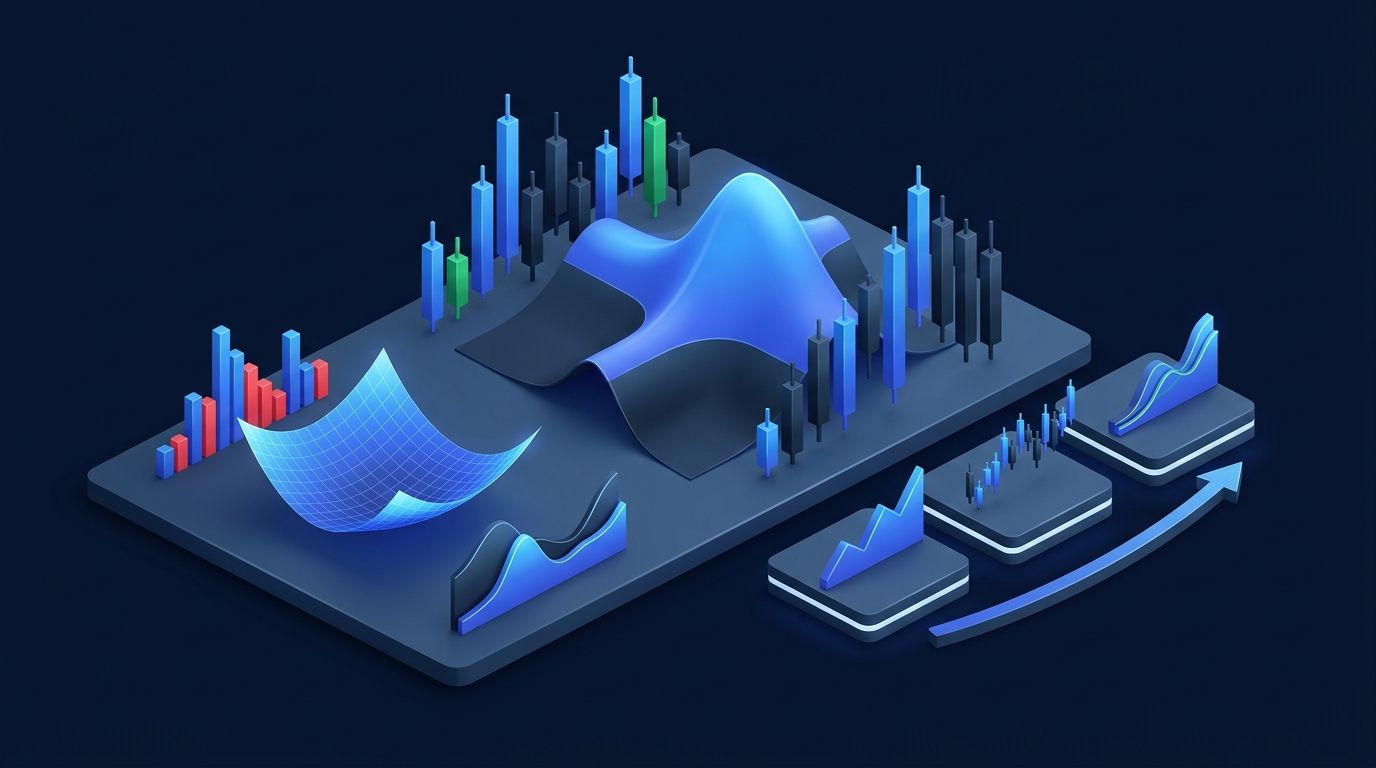
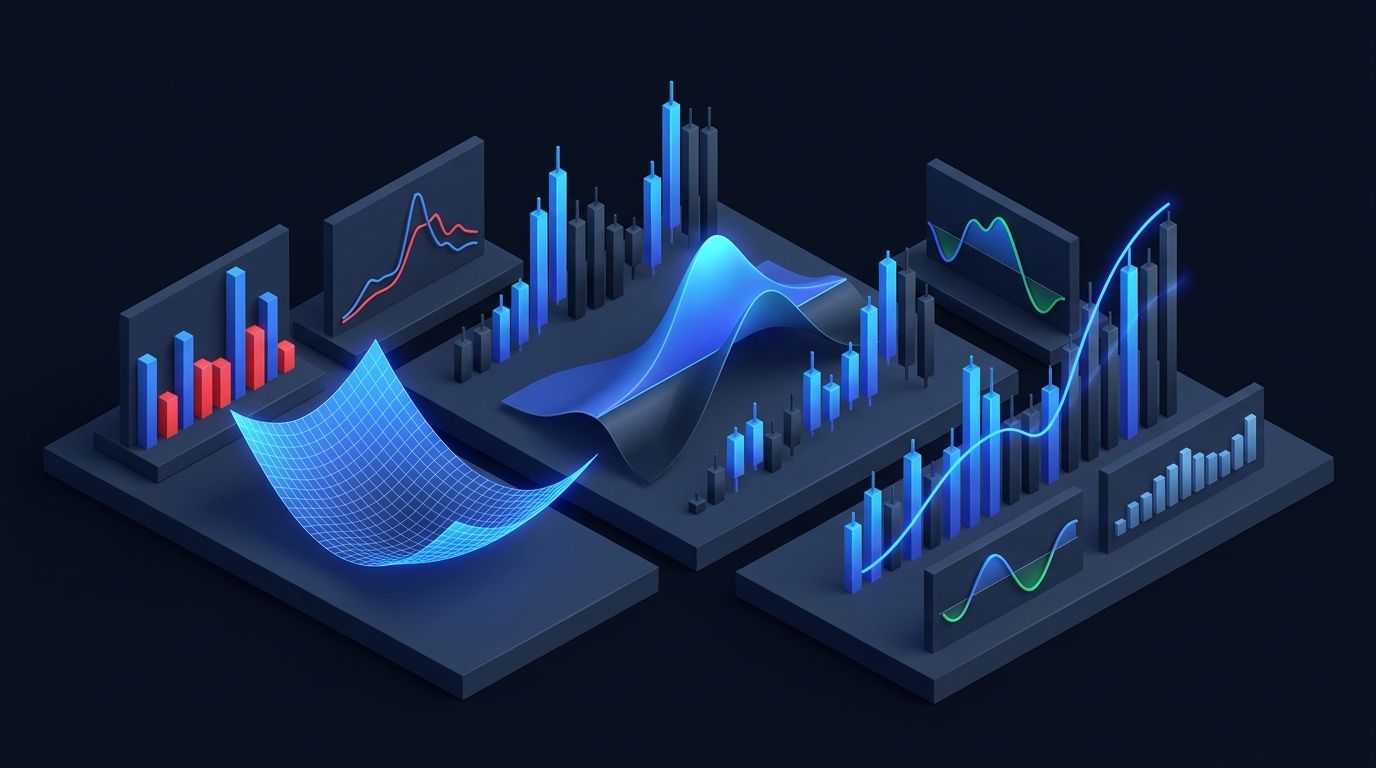
A volatility surface is a three-dimensional representation of implied volatility (IV) across all strikes and expirations for a given underlying. It answers a question that basic options theory leaves open: if implied volatility were the same for every contract, options pricing would be simple. But it is not. IV varies by strike price (skew) and by expiration (term structure), and the combination of those two dimensions forms the volatility surface.
Understanding the surface helps you select better strike prices and expiration dates — particularly for iron condors, which depend on IV at specific points across the surface.
Two Dimensions of the Volatility Surface
Volatility Skew: IV Across Strikes
In a flat-volatility world, every option at the same expiration would carry the same IV. In reality, out-of-the-money puts carry higher IV than out-of-the-money calls of the same expiration. This asymmetry is called put skew or negative skew, and it exists because:
- Portfolio managers consistently buy protective puts, driving demand and raising their IV.
- Market crashes happen faster and harder than rallies — the market prices in that asymmetry.
- Dealers who sell puts hedge by buying the underlying on the way down, which requires elevated put premiums to compensate.
For iron condor traders, this means the short put side of your trade typically collects more premium per unit of delta than the short call side. What Is Put Skew and How It Affects Iron Condor Strike Selection goes deeper on this specific dynamic.
Volatility Term Structure: IV Across Expirations
Term structure describes how IV changes as you move to different expiration dates. Most of the time, the volatility term structure is in contango — shorter-dated options have lower IV than longer-dated ones, because more time means more uncertainty.
During stress events, the term structure can invert (backwardation) — near-term options carry higher IV than far-dated ones. This happens when traders are scrambling to hedge immediate risk rather than long-dated exposure.
| Term Structure State | Short-Term IV vs Long-Term IV | Market Environment |
|---|---|---|
| Contango (normal) | Short < Long | Calm, expanding markets |
| Flat | Short ≈ Long | Transition, mild uncertainty |
| Backwardation (inverted) | Short > Long | Stress event, fear spike |
For iron condor traders, entering in contango is generally preferable — you are collecting premium on near-dated options while the market is relatively calm. Backwardation suggests caution.
What the Full Volatility Surface Looks Like
Plot IV on the vertical axis, strike prices on one horizontal axis, and expiration dates on the other, and you get the volatility surface. It typically shows:
- A "skew" from left to right — puts have higher IV than calls at the same expiration.
- A gentle upward slope from near-dated to far-dated expirations in normal conditions.
- A steeper left side (downside strikes) than right side (upside strikes).
CBOE's volatility research resources provide tools and data for understanding implied volatility across strikes and expirations, including VIX methodologies and volatility indexes by term.
Why the Volatility Surface Matters for Iron Condor Strike Selection
Iron condors involve four legs: a short put, long put further out, a short call, and long call further out. The IV at each strike directly determines the premium you collect and the cost of the wings.
Key implications:
- Short put IV is typically higher than short call IV. This means you can often place the put spread slightly closer to the money while still collecting similar premium to the call spread placed further away.
- Wing (long option) IV affects cost. If skew is steep, buying protective puts for your wings is relatively expensive. Wider wings may require more capital.
- Term structure affects entry timing. In contango, selling 30–45 DTE options captures a favorable part of the curve — not too far out (where you sacrifice theta) and not too short (where gamma risk increases).
If you want to see how IV percentile connects to this, How to Use IV Percentile for Iron Condor Entry Timing covers the practical framework.
What Options Skew Also Tells You About Market Sentiment
Skew steepness is a real-time sentiment indicator. When put skew is extreme — OTM puts are priced with very high IV relative to calls — the market is pricing significant downside risk. This often coincides with elevated VIX and fearful market conditions. When skew is flat or near-normal, the market is in a more balanced state.
Monitoring options skew as a market indicator gives iron condor traders one more data point when evaluating whether entering a position makes sense relative to perceived risk.
How Tradematic Uses Volatility Surface Data
Tradematic is an automated iron condor trading platform that uses real-time institutional market data — including gamma levels, dealer hedging flows, and hedge walls — to identify zones of structural price stability. The platform accounts for current IV conditions, term structure, and skew when finding optimal entry zones for iron condors.
Accounts start at $1,000, with $5,000–$20,000 being typical, and the platform connects to Tradier and Tastytrade.
Rather than manually reading a volatility surface every day, Tradematic's automation processes these inputs systematically — identifying when IV conditions at the relevant strikes support a favorable entry.
Start your 7-day free trial and let real-time market data inform your iron condor entries automatically.
Frequently Asked Questions
What is the volatility surface in simple terms? It is a 3D map showing implied volatility across all strikes and expirations for a given asset. The two main features are skew (IV varies by strike) and term structure (IV varies by expiration date).
Why do puts have higher implied volatility than calls at the same strike distance? Because demand for downside protection is consistently higher than demand for upside exposure through options. Portfolio managers buy puts to hedge equity positions, keeping put demand — and thus put IV — elevated relative to calls.
Does skew change over time? Yes. Skew steepens during market stress and flattens during calm periods. It is not static, and monitoring it gives traders useful context about current market sentiment.
How does term structure affect which expiration to sell? In normal contango, selling options 30–45 days out captures a favorable theta/gamma ratio. In backwardation (inverted term structure), near-term options carry abnormally high IV — selling them can be attractive but comes with higher gamma risk and faster position movement.
Can individual traders access volatility surface data? Yes. Broker platforms like Tastytrade display IV by strike and expiration. Third-party tools and CBOE data also provide volatility surface visualization for most liquid underlyings.
Trading involves risk and losses can occur. Past performance does not guarantee future results. Options trading is not suitable for all investors. Only allocate capital you are comfortable risking.
Ready to automate your options income?
Tradematic handles iron condor execution automatically using institutional-grade data. No experience required.
Start 7-Day Free Trial →